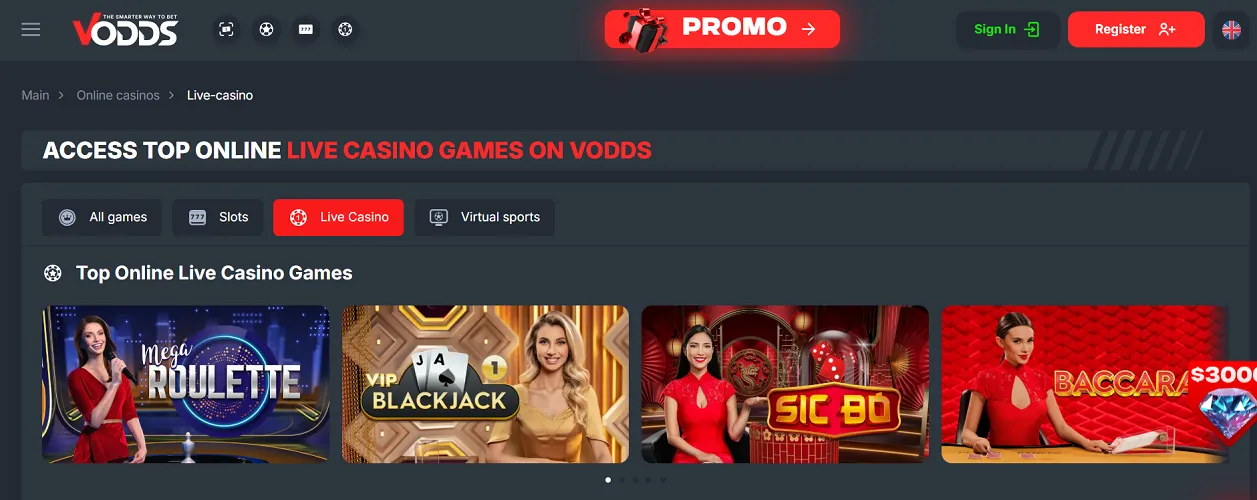
Vodds Live Dealer Casino Basics

Learn how Vodds live tables work, set limits first, and enjoy real-time play in the United Kingdom only if you are 18+.

Play Now!
Slot Fortune Gems 2

Table of Contents

  • The Dog House Megaways Slot
  • Lucky Joker 10 Extra Gifts Slot
  • Sword of Ares Slot
  • Floating Dragon Hold & Spin Slot
  • Leprechaun Riches Slot
  • Fruit Coctail Slot
  • The Dog House Megaways Slot
  • Sword of Ares Slot
  • Fruit Million Slot
  • The Dog House Megaways Slot
  • Fruit Box Slot
  • Big Fisherman Slot
  • Seven Books Unlimited Slot
  • Crypto Casino Vodds Fortune Slot
  • Sword of Ares Slot
  • Floating Dragon Hold & Spin Slot
  • 9 Mad Hats Slot
  • Floating Dragon Hold & Spin Slot
  • Big Bass Splash Slot

Live Casino Vodds: What You Get From Real Dealers

Imagine you open a table and see a real dealer shuffling cards, not an animation. The pace feels different straight away: you have a few seconds to decide, you can watch the flow, and you quickly notice how your own habits show up under pressure. Many players like that it feels closer to a physical venue, but that also means it is easier to drift into longer sessions if you do not set a clear stop point.

Play Now!
live 1

A live-dealer area is basically a streamed table with an interface layered on top. You place bets, you see the dealer deal, and the software handles the settlement. The practical upside is clarity - you can follow each step and you do not have to guess why a result happened. The practical downside is timing - if you are distracted, you will click late or misread a prompt.

For United Kingdom users, the key is to treat it as structured entertainment. Start only if you are 18+, keep your account secure, and use limits and breaks so the format stays enjoyable rather than intense.

live 2

Live Casino Online Vodds: A Safe Start In The United Kingdom

Picture this: you have a spare half hour, you want to try a couple of tables, and you do not want account hassle later. A safe start is boring on purpose - create your account, set your boundaries, then explore. Most people do it backwards because they want instant action, and that is when simple mistakes happen (weak passwords, no limits, rushed deposits).

Play Now!

Begin with security. Use a strong password, turn on extra sign-in checks if offered, and avoid saving details on shared devices. Next, set a budget for the session and a time window for play. Then open a table and watch one round before you bet - just to see how prompts, timers, and chip values are displayed.

If anything feels unclear, pause and read the table rules. The best moment to learn is before you place a bet, not after you are already reacting to a countdown.

live 3

Choosing Tables And Keeping Control

Imagine you join a popular table and the chat is moving fast, timers feel short, and you are suddenly making decisions quicker than you like. This is where table choice matters as much as bankroll. Start with calmer tables, lower limits, and a pace that gives you space to think.

Play Now!

Instead of chasing the "most exciting" option, build a small routine: pick one game type, play a short block, stop, then decide if you want a second block. That routine turns a potentially intense format into something you can manage.

Game Types, Pace, And Table Etiquette

Picture a player who jumps between blackjack, roulette, and baccarat within ten minutes, then wonders why it all feels chaotic. Usually, the chaos is self-made. Choose one table type first, learn its rhythm, and only then consider switching. It is easier to play responsibly when your brain is not constantly resetting to new rules and new betting patterns.

Table etiquette is simple but underrated. Keep chat respectful, do not spam, and do not treat the dealer as support staff for account questions. More importantly, respect the timer: if you are not ready, sit out a round. Sitting out is not "missing out" - it is how you prevent rushed bets that you would not place with a clear head.

Video Quality, Device Setup, And Focus

Imagine you are on mobile data, the stream stutters, and you press twice because you think nothing happened. That is a fast track to frustration. Before you play, make your setup stable: a reliable connection, enough battery, and fewer background apps. If the stream quality drops, step back and fix the environment rather than pushing through.

Sound matters too. Some people play better with sound low because it reduces stimulation; others need sound cues to avoid missing prompts. Try both in short bursts and pick the option that helps you stay calm and attentive.

H4 Quick Pre-Session Checklist

Imagine you want a short session that ends on time. Do a quick check: confirm you are logged into the right account, confirm chip values and minimum bets, and confirm your session budget and end time. Close unrelated tabs, silence unnecessary notifications, and decide on one table to start with.

If you feel rushed before you even begin, that is already information. Start later, not faster.

H4 When To Pause Or Walk Away

Picture the moment you notice you are betting just to stay in the flow, not because you actually want to. That is the cleanest signal to pause. Take a break, stand up, and return only if you can explain why you are playing and what your stop point is.

If your mood has shifted - irritation, impatience, chasing a feeling - end the session. The format will still be there tomorrow, but your focus will not.


Money Management And Account Hygiene

Imagine you finish a session and realize you never once checked how much you actually staked overall. That is common in streamed tables because the action feels continuous. The fix is not complicated - it is structure. Decide your limits first, keep records simple, and avoid making financial choices mid-session when adrenaline is higher.

A good rule: money decisions happen before you sit at a table, not while a timer is counting down.

Deposits With A Plan, Not An Impulse

Picture a player who deposits "a bit more" after a few exciting rounds, then repeats it three times. The total becomes bigger than intended, and the session stops feeling fun. Prevent this by setting an upfront deposit cap and treating your session budget as the full cost of entertainment for that day.

Choose a payment method you understand and trust, and keep the process calm. If you are on the move or distracted, wait. Deposits made in a hurry often lead to avoidable errors and stress.

Topic

What To Check First

Why It Helps

Session Budget

A fixed maximum spend

Stops gradual top-ups

Deposit Method

Familiar steps and confirmations

Reduces mistakes under pressure

Identity Checks

Completed before you need them

Avoids last-minute blocks

Withdrawal Routine

One method, consistent details

Limits confusion and delays

Support Contact

Clear issue description ready

Speeds up resolution

Withdrawals Without Panic

Imagine you want to cash out after a good session, but you are tired and tempted to click quickly. Slow down. End the session first, review your account details, and follow the withdrawal steps carefully. Switching methods mid-process without a clear reason can add friction and extra checks, so keep it simple.

If you are unsure about a requirement, stop and ask for clarification through support rather than guessing. Precision beats speed here. A calm, consistent routine is the easiest way to reduce anxiety around cashing out.

Support, Disputes, And Keeping Records

Picture a round where you are not sure what happened because your stream froze for a second. In that situation, random clicking makes the problem worse. Instead, note the time, device, and table name, then contact support with a clear description of what you saw and what you tried (refresh, reconnect, device restart).

Good support conversations are short and factual. The more specific you are, the fewer back-and-forth messages you need, and the faster you can return to a normal experience.

Responsible Play Tools In The United Kingdom

Imagine you start a session feeling relaxed, then the pace pulls you in and time disappears. That is exactly why safer-gambling tools exist. They are not "for someone else" - they are for the moment when you are not thinking clearly.

In the United Kingdom, play only if you are 18+ and use the control options available. When limits and breaks are set upfront, you do not have to rely on willpower in the middle of a streak.

Limits That Actually Work In Real Life

Picture a limit that looks good on paper but is so high you never hit it. It will not protect you. Set limits that match your real budget and your real habits. A practical approach is to keep them slightly stricter than you think you need, because live-dealer play can make you underestimate total spend.

Also, keep it simple: one session limit, one time limit, one clear stop rule. Complicated systems are easy to ignore.

Reality Checks And Session Breaks

Imagine you look up and an hour has passed. Reality checks are designed for that moment. Use reminders that interrupt the flow and force a decision: continue or stop. Pair them with scheduled breaks, like a five-minute pause after a fixed number of rounds.

Breaks do not ruin the experience. They make the experience safer, and they often improve enjoyment because you are not playing on autopilot.

Timeout And Self-Exclusion Options

Picture a day where you are stressed and you notice you are using play to escape the feeling. A timeout can remove access for a period and give you space to reset. It is a practical tool because it reduces the chance of making impulsive deposits or chasing losses.

If you find the pattern repeats, stronger exclusion tools can help. The point is not punishment. The point is removing frictionless access when it is not good for you.

Signs It Is Time To Get Support

Imagine you keep thinking about returning to the table even when you do not enjoy it. Or you start hiding spend, or you feel relief only while playing. Those are serious signals to step back and talk to someone you trust.

Support can be as simple as a conversation with a friend, or speaking with a professional. Combine that with stricter limits or a longer break, and you give yourself a real chance to regain control.

Common Mistakes Players Make With Dealer Tables

Imagine you sit down with good intentions, then fall into three common traps: switching tables too fast, raising stakes after emotion spikes, and playing while distracted. These mistakes are not about intelligence - they are about environment and timing. Fix the environment and your decisions improve.

Another classic misstep is treating streamed tables like a fast slot session. The timer creates urgency, and urgency invites impulsive clicks. If you often feel rushed, pick calmer tables, lower stakes, and fewer simultaneous decisions.

Finally, many people skip the dull steps - account verification, security settings, budget planning - then deal with the consequences later when they are tired. Do the boring work first. It buys you comfort and fewer interruptions.

A Simple Routine For Your Next Session

Imagine your next session ends exactly when you planned, with no stress and no "just one more" loop. Start with your budget and end time written down mentally, choose one table, and watch one round before betting. Keep your phone quiet, keep your pace steady, and take a short break halfway.

If you feel your mood shift, stop immediately. The strongest skill in live-dealer play is not strategy - it is ending the session when you decided to end it.

FAQ

Start with calmer tables and lower minimum bets, then watch one full round before placing anything. Imagine you are learning a new routine - you want a pace that gives you time to read prompts and understand chip values. If a table feels rushed, switch to a slower one rather than forcing yourself to keep up. The goal is comfort and clarity, not intensity.

Pause and avoid rapid clicks, because double-taps often create new confusion. Picture yourself trying to fix a problem while a timer runs - it is better to step back. Refresh the table, check your connection, and note the time and device. If the issue repeats, contact support with those details so they can investigate properly.

Set a fixed session budget and a clear end time before you join a table, then treat those as non-negotiable. Imagine your budget as the price of a ticket - once it is used, the event is over. Use reminders and short breaks to interrupt autopilot. If you notice yourself increasing stakes emotionally, end the session rather than trying to "discipline" yourself mid-flow.

It depends on where you keep the best focus. Imagine mobile play with notifications and movement - it can push you toward rushed decisions. Desktop can be steadier, but it can also lead to longer sessions because it feels comfortable. Test both in short blocks, then choose the setup where you can follow your limits and stop on time.

Use a strong password, enable extra sign-in checks if available, and avoid saving details on shared devices. Picture what happens if someone else gains access - the stress is avoidable. Complete any required identity steps early so you are not blocked later. Log out after sessions and keep your device locked when you are away from it.

Use it as soon as you notice you are playing to escape stress, chasing a feeling, or ignoring your own limits. Imagine you are trying to make good choices while frustrated - it rarely works. A structured break removes the option to continue in the heat of the moment. If the pattern repeats, a longer break is often the most effective reset.

Stop when you cannot clearly explain why you are still playing, or when you feel urgency rather than enjoyment. Imagine you are continuing only because the table is “live” - that is not a healthy reason. If you start raising stakes to change your mood, or you feel irritated at normal outcomes, end the session. The best time to stop is the first time you notice control slipping.

🇬🇧 English
Play Now